Suited man found dead with chilling final warning letter
Suited man found dead with chilling final warning letter
A smartly dressed man found dead on a beach in Adelaide, Australia, in 1948 – with a cryptic message in his pocket – baffled investigators for decades.
A well-dressed man discovered slumped against a wall on a beach with a mysterious message in his pocket sparked decades of bewilderment surrounding one of the globe’s most bizarre mysteries.
Referred to as the Somerton Man or ‘Tamam Shud’, after the note found in his possession, the body was discovered in Adelaide, Australia, in 1948. Numerous hypotheses surfaced involving Cold War espionage and homicide.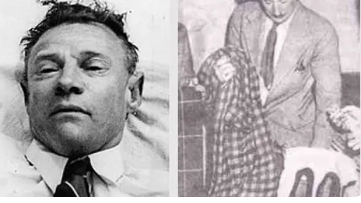
During the early evening of November 30, a couple strolling along Somerton Beach encountered the man on the shore and reported seeing him lift his right arm before letting it fall. Believing him to be intoxicated, they left, according to Discovery.
The following day another walker spotted the man. There was an unlit cigarette resting on his collar, a bus ticket of uncertain usage and an unused train ticket from Adelaide to Henley Beach in his possession, an American-manufactured comb, a packet of chewing gum and a box of cigarettes which, curiously, held cigarettes from a different brand.
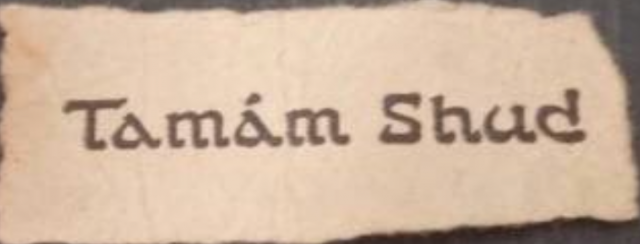
Tamám shud – a Persian expression meaning ‘it is over’ – was discovered in the man’s jacket, reports The Guardian. The fragment was subsequently identified as originating from a volume of Persian verse called the Rubiyat
Travel tickets from a neighbouring Australian town indicated he had travelled from close by, while the labels from his garments had been peculiarly removed, prompting detectives to suspect criminal activity.
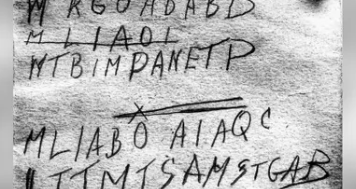
A suitcase subsequently recovered from a locker thought to belong to him held additional clothing with the tags cut out and enigmatic writings, merely deepening the puzzle. A telephone number was also discovered amongst his possessions.
The investigation revealed it belonged to a local nurse by the name of Jessica Ellen Thomson. She claimed she had no knowledge of the deceased man, had no idea why her telephone number would appear in the book, nor why he would have been approximately a mile from her home on the night he died.